Flowmono
Designing clarity inside a workflow-heavy product built for business operations and productivity.
Flowmono is a business software platform for documents, e-signatures and process management. I joined the product as the designer on the flagship experience and my role later expanded into product design leadership as the product and design team grew.
The work started around a straightforward need: help people create, send, sign and manage documents without relying on paper-heavy processes. As the platform matured, the product expanded beyond signing into storage, APIs, mobile use, enterprise-specific solutions and process management.
My contribution included product research, interaction and visual design, prototyping, reusable components and the design system. Later, I also coordinated design direction with three other designers while continuing to work on major product areas.
The work shows how the product moved from a focused signing experience toward a broader workflow platform without losing clarity as its scope, team and design system expanded.
The product grew from a focused e-signing MVP into a broader workflow platform, with continued adoption and custom solutions designed for two multinational banks.
The opportunity began with how much business work still depended on slow, manual document processes.
Flowmono grew out of a practical problem: important document work still depended heavily on paper, fragmented communication and manual follow-up. Signing agreements, processing vendor information, handling approvals and onboarding people could require several disconnected steps, which became even harder to manage as more teams worked remotely.
The team had already built tailored digital solutions for corporate clients, so there was clear evidence that organisations wanted better ways to handle these processes. The opportunity was to turn that experience into a product more businesses could use, rather than solving the same operational problems one client at a time.
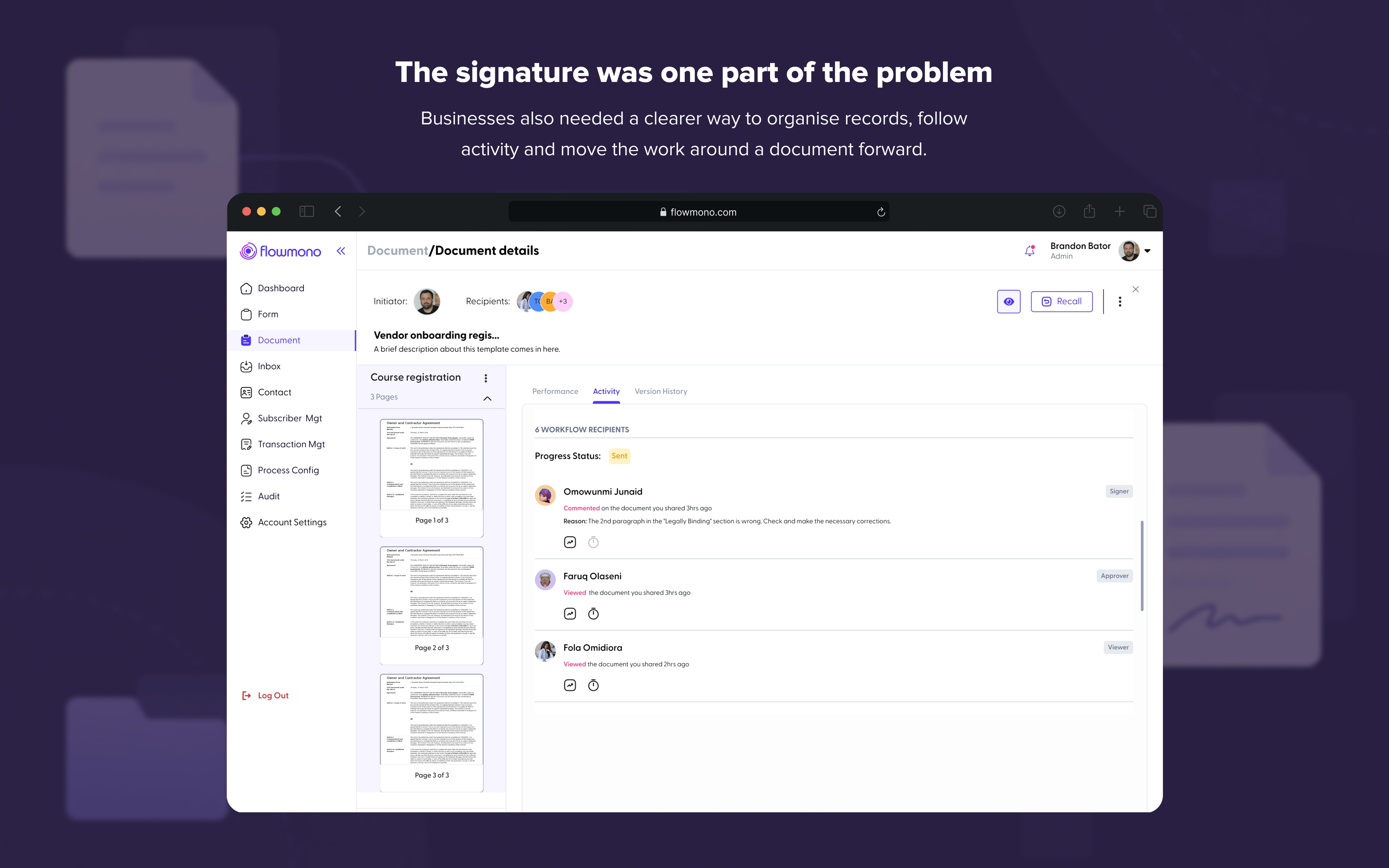
That made the product opportunity broader than e-signing. Flowmono needed to help businesses reduce paperwork, keep records organised, understand document activity and move the work surrounding a document forward without the cost or complexity users often encountered in existing tools.
The signature was only the beginning. The larger opportunity was helping businesses move everyday document work into a more reliable digital flow.
Understanding where e-signing ended and broader business workflow needs began.
I worked with the Product Manager on competitive research and validation with existing and potential users of document-process platforms. I reviewed products such as DocuSign and PandaDoc, but the useful question was not how to reproduce their feature lists. It was what people and organisations actually needed once a document became part of a larger business process.
The research showed two scales of the same problem. An individual or small team might mainly need to prepare, send, sign and track documents. A growing organisation needed more: shared records, activity tracking, onboarding workflows, approvals, administrative visibility and a reliable place to keep business information accessible.
Competitive analysis also highlighted a usability and access gap. Mature products offered powerful signing and document features, but cost, setup complexity and technical overhead could make them harder to adopt for some businesses. That created room for Flowmono to be approachable for everyday document work while still having enough structure to grow into more complex operational workflows.
The market research reinforced that direction. The source material identified a large and growing digital-signature and process-automation market, supporting the decision to think beyond one signing flow and build a platform that could expand into document management, approvals, process coordination and enterprise use.
Six questions turned the research into design direction.
The first version stayed close to the document.
I worked on the flagship MVP as part of the design team, collaborating closely with product management, QA and engineering.
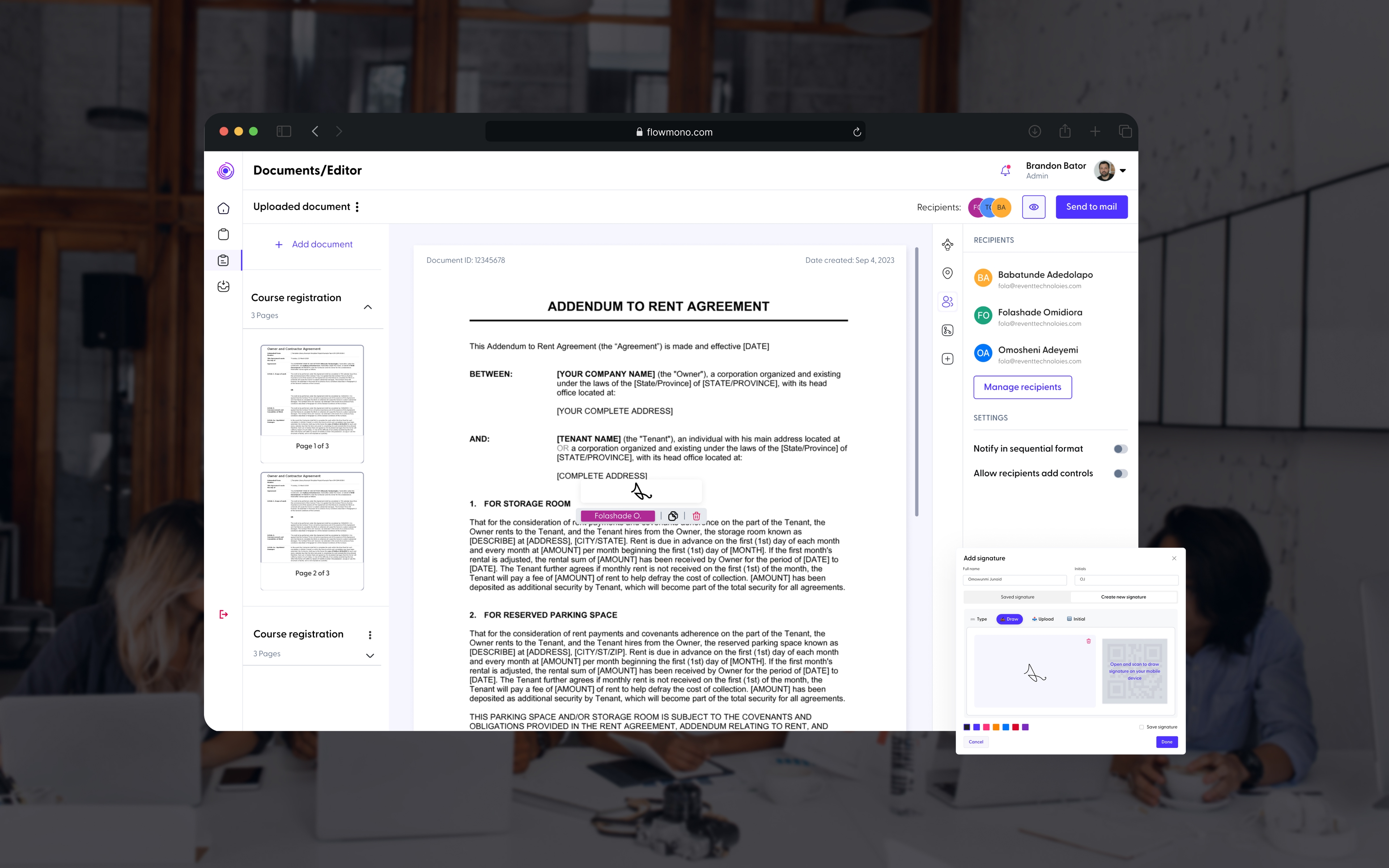
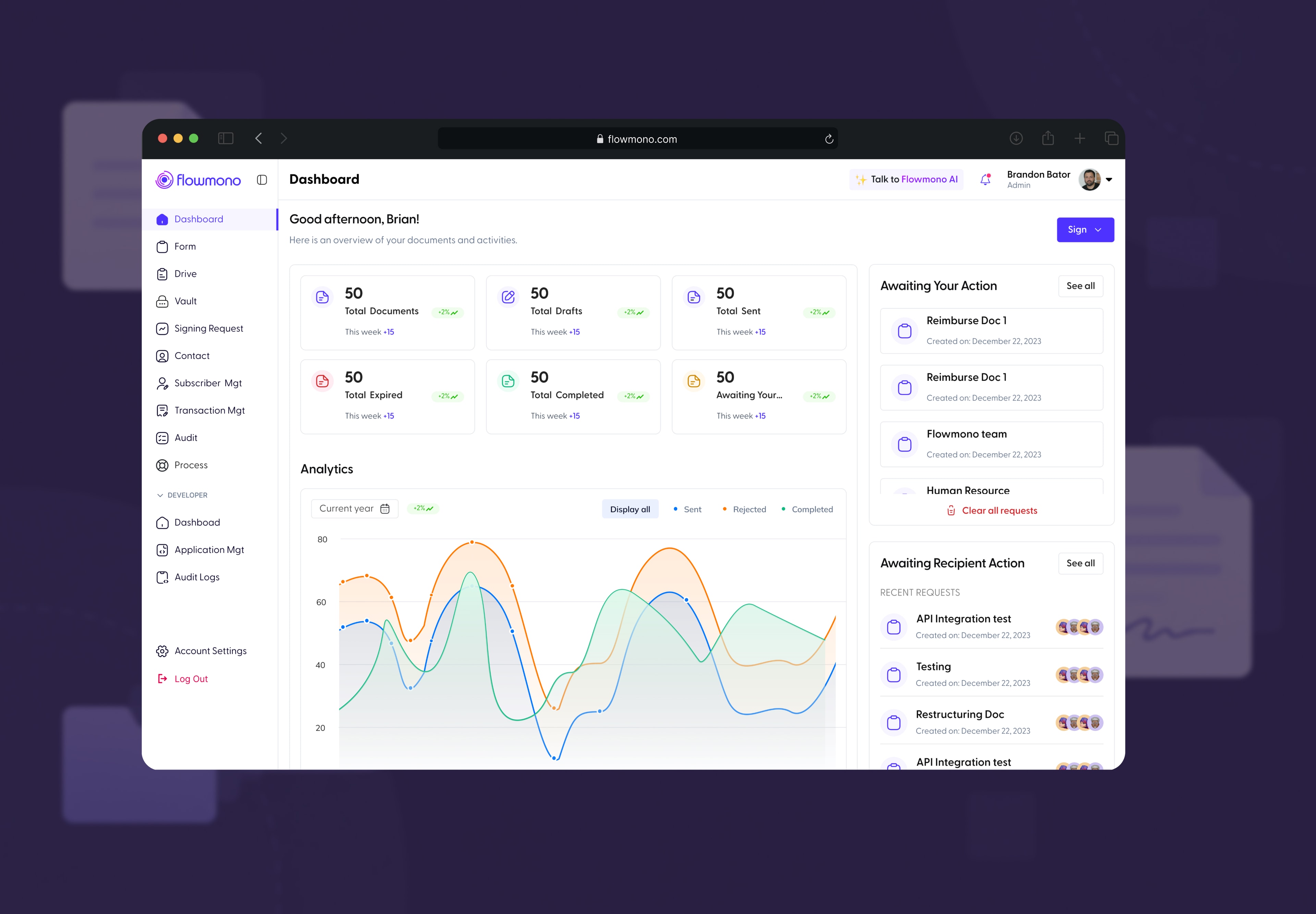
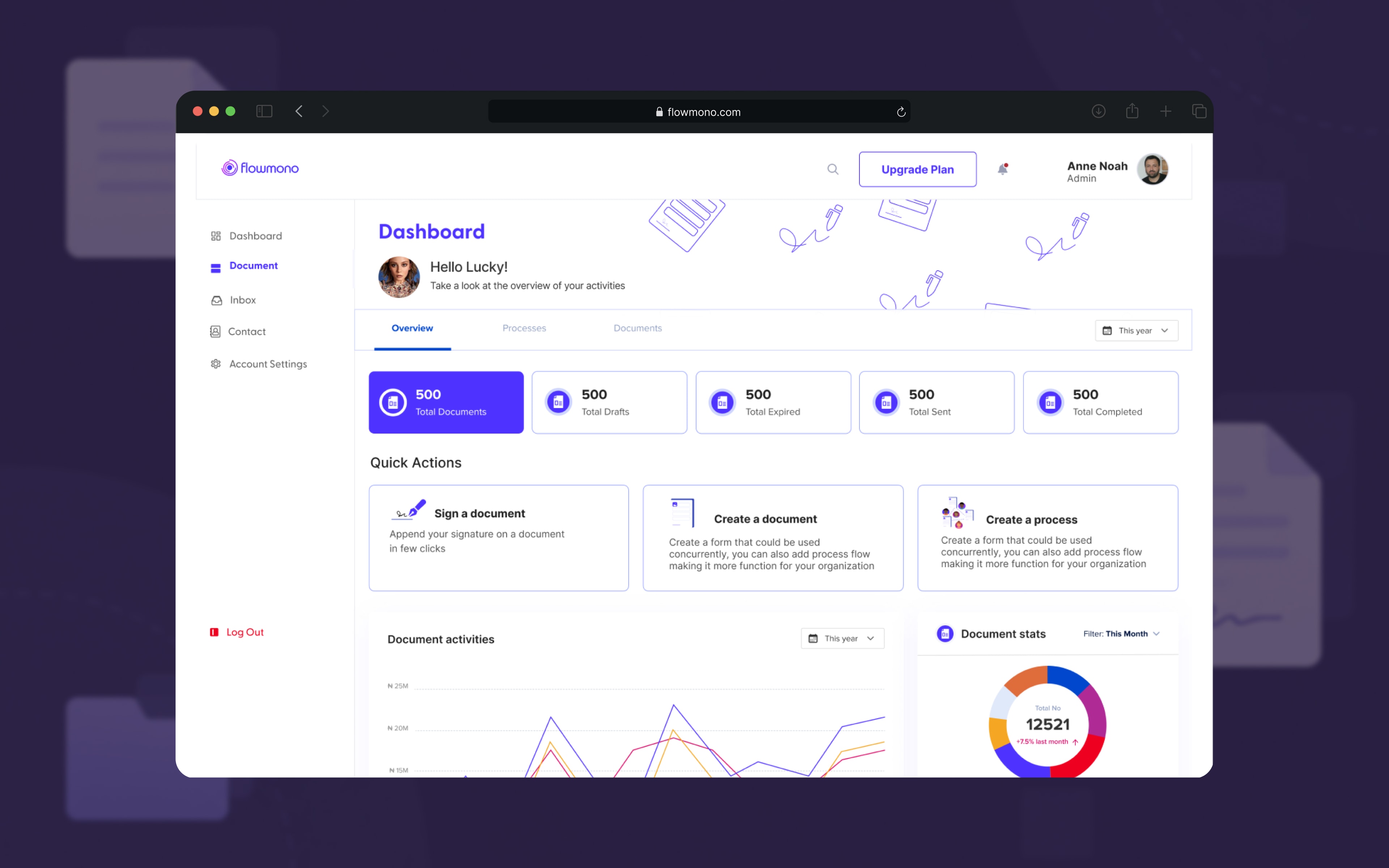
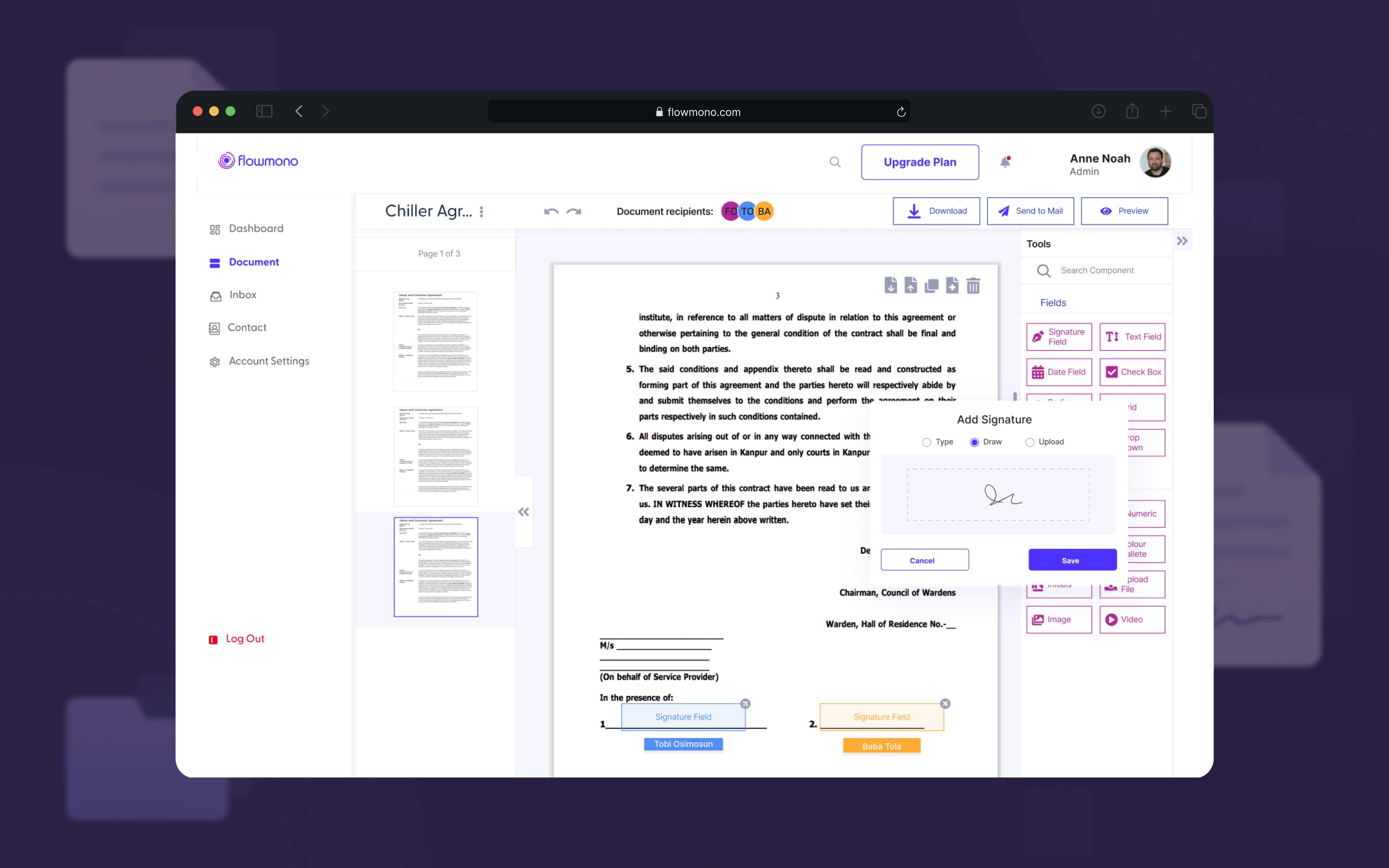
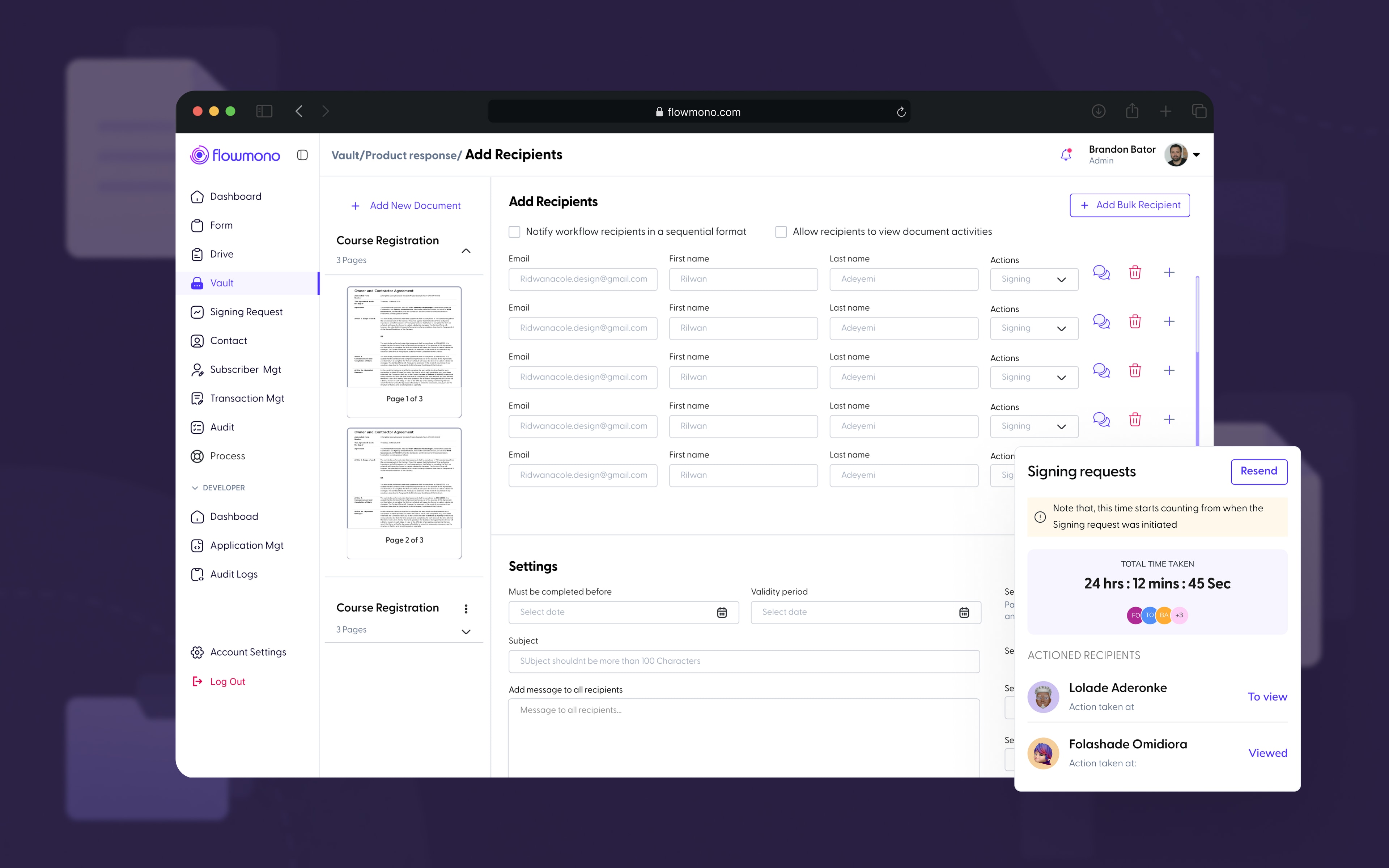
The first release focused on the foundations: a document editor, e-signing tools, file storage, an inbox and a dashboard for following activity.
My work covered the interface, prototyping, reusable components and the early style system. I established those patterns early because the product was expected to expand beyond the initial set of features.
The goal was to make the first action feel obvious while leaving enough structure for the rest of the product to grow.
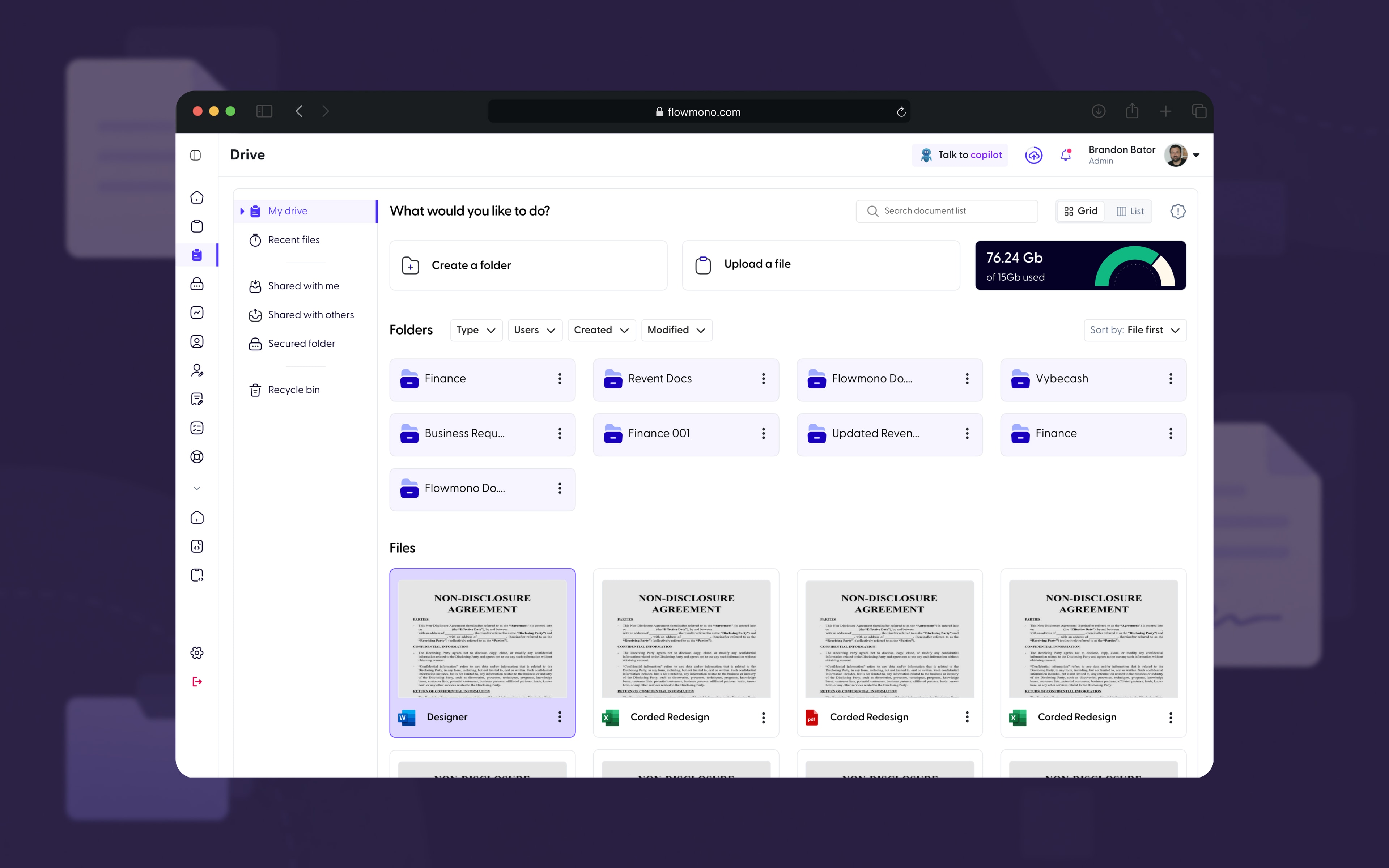
As Flowmono gained more features, the design system had to do more work.
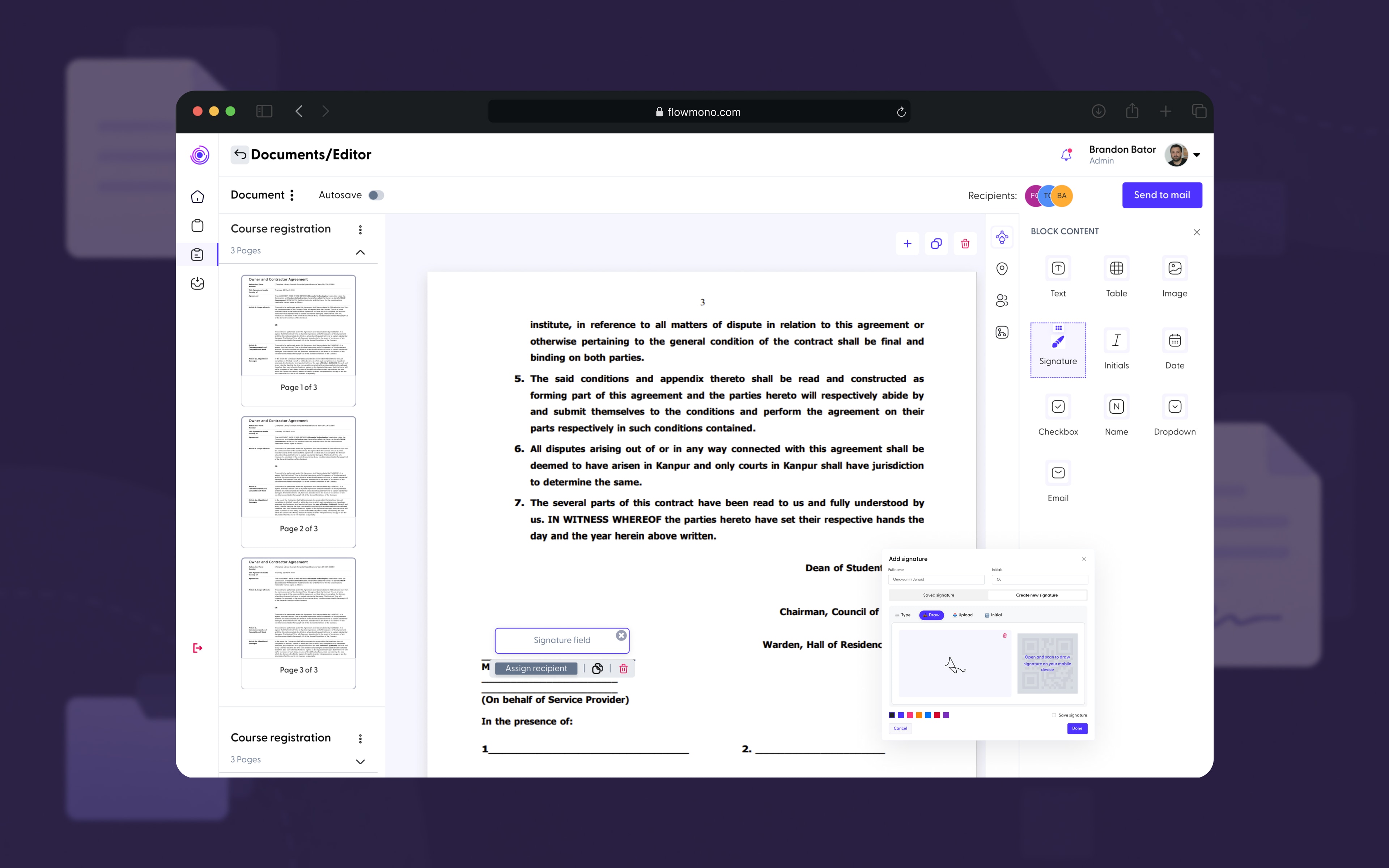
The second phase refined the overall interface and made the product more consistent across a growing number of workflows.
The platform expanded into areas such as APIs, stronger document management and broader organisational use. The design challenge was to make those additions feel like one product rather than a series of separate tools.
This was where the component system and shared interaction patterns became especially valuable. The shared patterns created a common language for adding new functionality without redesigning familiar interactions each time.
The product eventually needed to manage the process, not only the document.
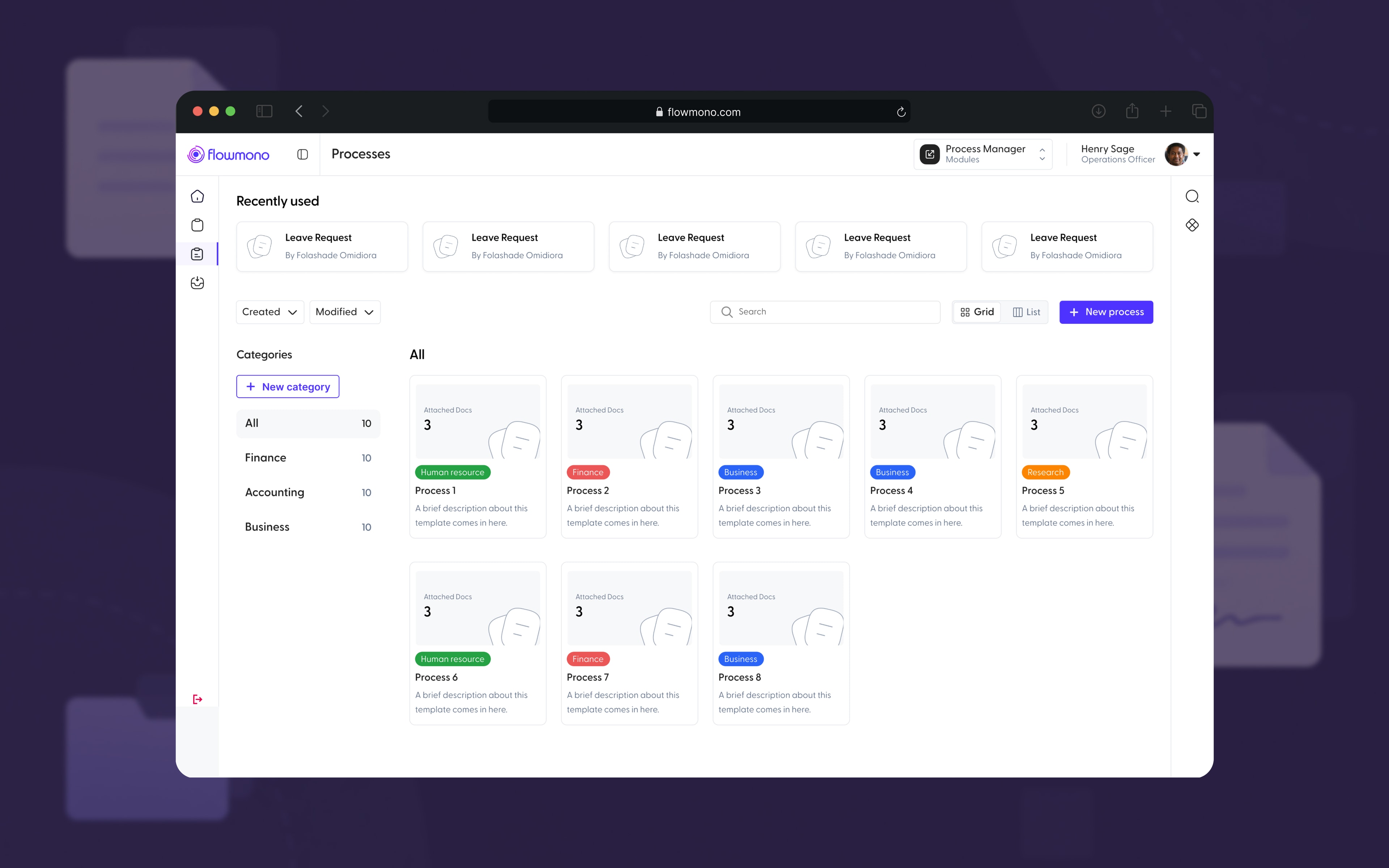
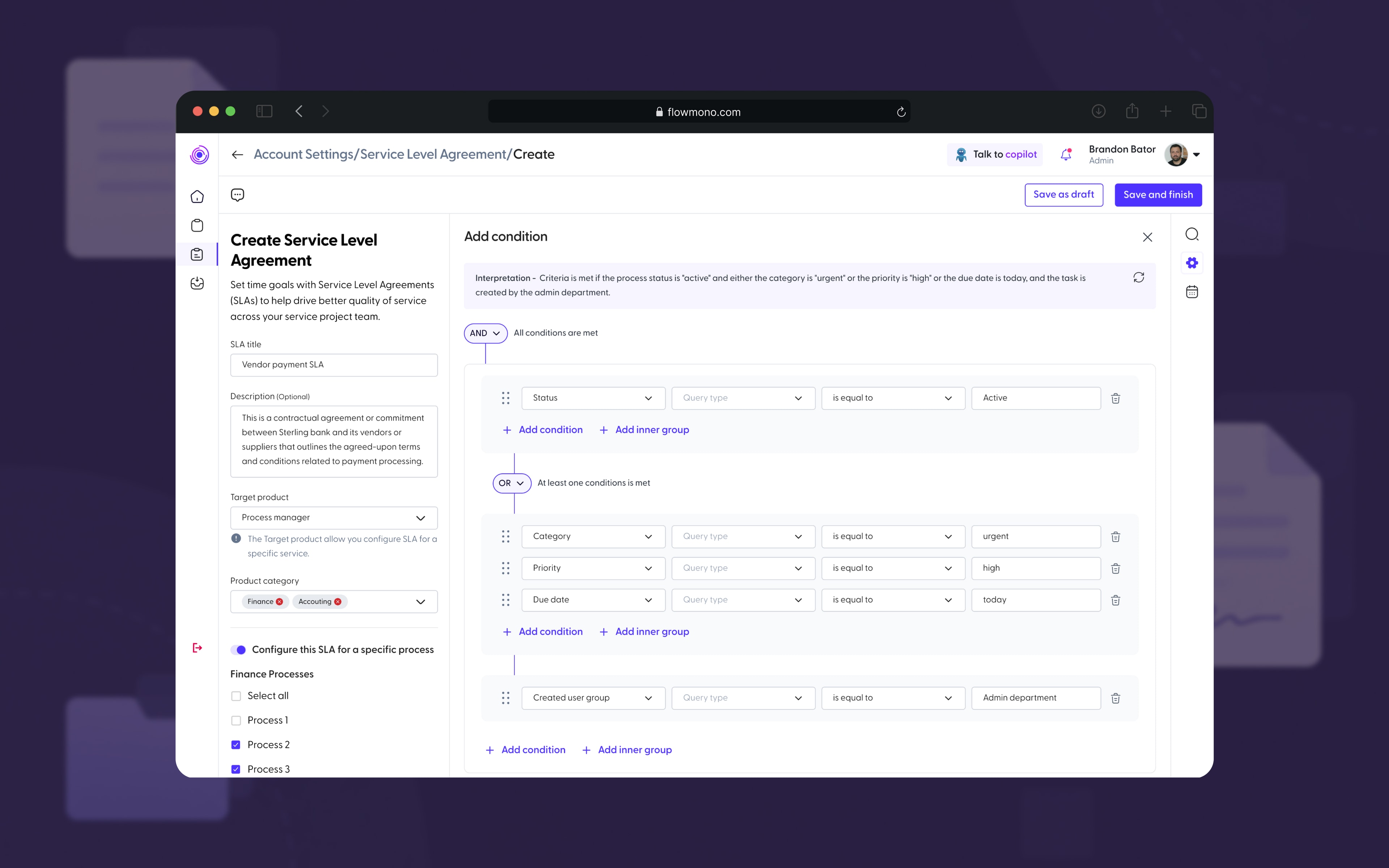
As Flowmono expanded, I also worked on the process-management side of the product.
The idea was to let businesses structure the work that surrounds a document or operational request, including steps, approvals, forms, assignments and progress tracking.
That changed the design problem. A signing request is usually a fairly linear action. A business process can branch, wait for approvals, collect information from different people and continue over a much longer period.
The Process Manager therefore needed a clearer mental model for creating and following workflows, while still feeling connected to the wider Flowmono product.
Flowmono's current product material describes Process Manager as a way to design, execute and monitor business workflows, including approval chains and cross-department processes. That direction fits the broader shift I worked on from a document tool toward a process platform.
The same product thinking also had to work inside large institutions.
Alongside the core product, I designed customised solutions for two multinational banks within three months. These projects took the underlying Flowmono product thinking into environments with more specialised workflows and much stricter operational expectations.
The work introduced different requirements around security, permissions, compliance and the way information moved between teams. Instead of treating those needs as entirely separate products, the design challenge was to understand which parts should remain consistent with Flowmono and where the experience genuinely needed to adapt to the institution.
That reinforced why the product system needed to be flexible. The interface had to stay recognisable and reusable, while still supporting organisation-specific workflows without turning every enterprise request into a completely new design language.
The experience continued beyond the desktop.
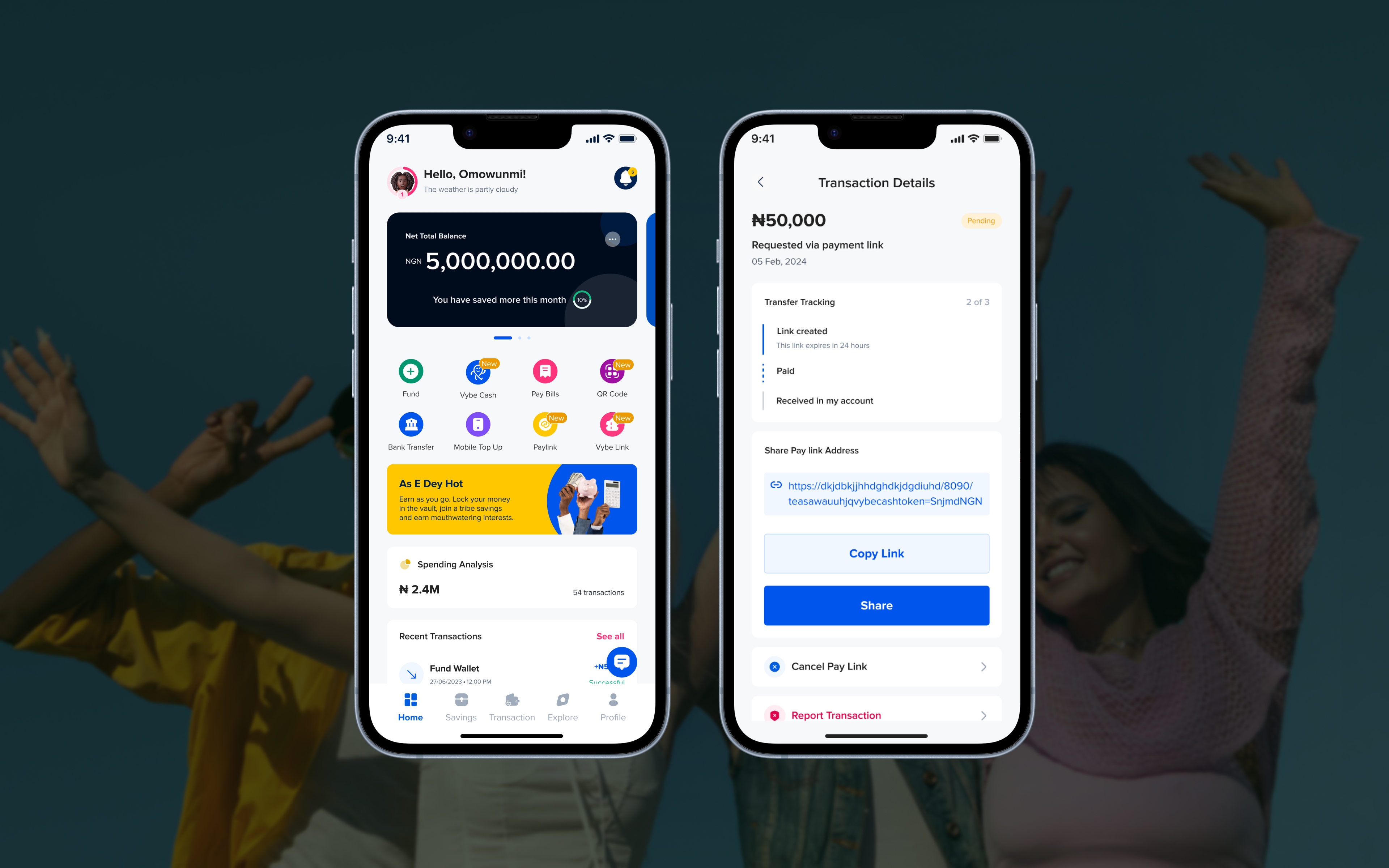
The product direction later extended into mobile access so people could review, share and sign documents away from the desktop.
The case study material also documents work around APIs and broader workflow capabilities. Some later Flowmono features evolved further after the period covered by this project, so I keep those separate from the work I directly describe here.
By this point my role had also changed. I was no longer only designing individual features; I was helping coordinate product design decisions across a larger design team.
The hardest part was keeping the product understandable while its ambition kept growing.
One lesson was to design the product model before polishing the interface. Signing, storage, APIs, process management and enterprise workflows can quickly compete for attention if their relationship is unclear.
Another was that a design system becomes more valuable as change accelerates. Shared patterns reduced repeated decisions and gave designers and engineers a common foundation for new features.
The biggest personal shift came as the design team grew from a smaller group into a larger team and I began coordinating newer team members. I had to think beyond the quality of my own screens and create enough clarity for other designers, engineers and stakeholders to make consistent product decisions.
The product grew well beyond its first release.
By January 2024, Flowmono had passed 1,000 users, with 92 corporate subscriptions and 393 individual subscriptions. These are historical figures from that period, not current usage statistics.
I also designed customised solutions for two multinational banks within three months.
For me, the lasting impact was seeing the product move from a focused e-signing MVP into a wider document and process-management platform, while the design system and team structure grew alongside it.
The product grew, and the design system had to grow with it.
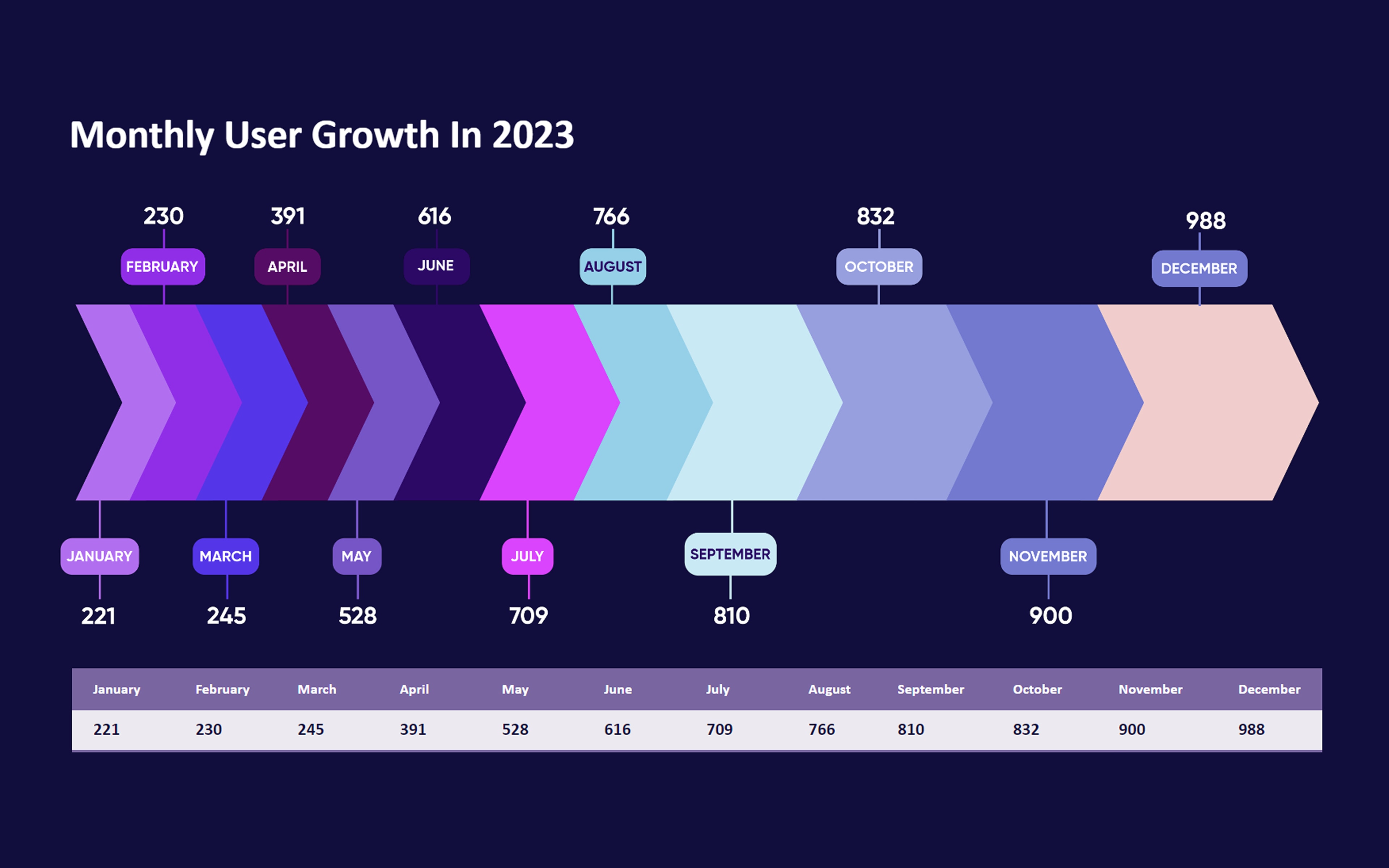
What the design changed.
The product grew from an e-signing MVP into a broader document and process-management platform.
Users reported by January 2024
Historical figure from that period.
Corporate subscriptions
Reported in the January 2024 project snapshot.
Individual subscriptions
Reported in the same project material.
Custom enterprise solutions
I designed customised solutions for two multinational banks within three months.
The product grew, and the team grew with it
As Flowmono expanded into more product areas and enterprise work, the design team also grew. I increasingly coordinated newer team members while helping keep product decisions and design patterns consistent across the wider experience.